
How to Choose, Store and Use Wood-Pressed Oils for Everyday Cooking
Cooking oil is an essential part of everyday Indian food. From traditional curries and vegetable dishes to pickles and homemade recipes, the oil we choose can influence flavour, aroma and the overall character of a dish.
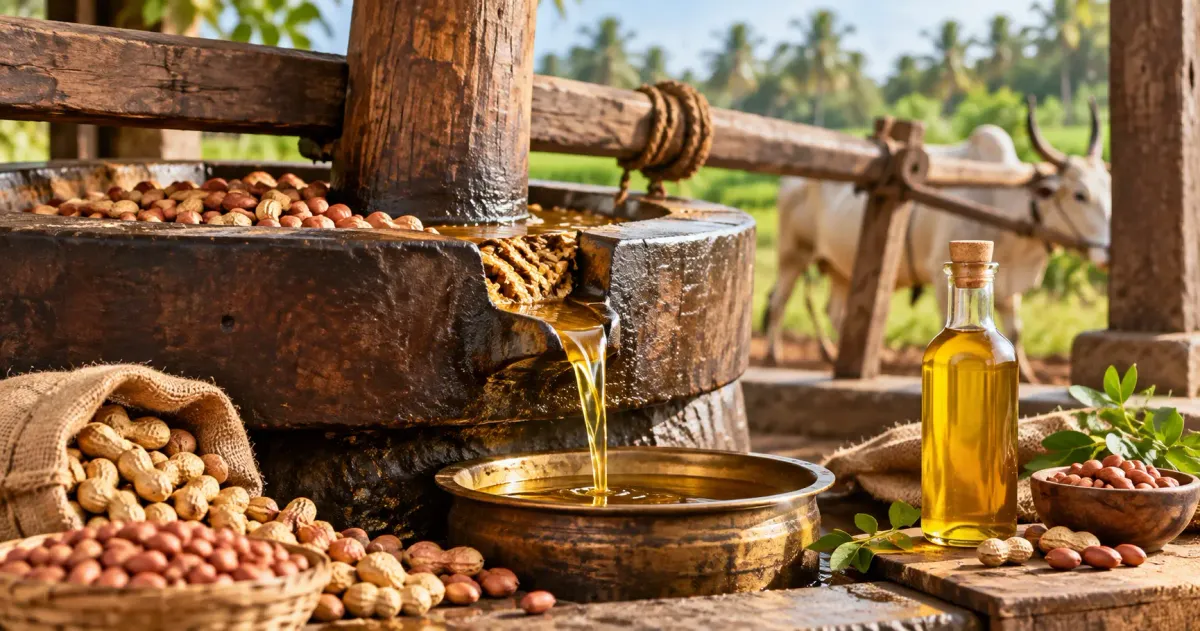
Wood-pressed oils have been part of traditional Indian food practices for generations. They are produced using mechanical pressing methods such as a traditional wooden ghani or chekku. Unlike highly processed oils, wood-pressed oils are valued for their natural aroma, characteristic flavour and traditional method of extraction.
But choosing a wood-pressed oil is only one part of the process. Knowing how to select, store and use it properly can help maintain its quality and freshness.
What Should You Look for When Buying Wood-Pressed Oil?
When choosing a wood-pressed cooking oil, look beyond the label. Consider the source, ingredients, packaging and processing information.
1. Check the Oil and Ingredient Information
Look for clear information about the primary ingredient used to make the oil, such as groundnuts, sesame seeds, coconut or mustard seeds. A transparent ingredient list helps you understand exactly what you are purchasing.
2. Understand the Extraction Method
Traditional wood pressing uses mechanical pressure to extract oil from seeds or other oil-rich ingredients. The slower extraction process is one of the reasons wood-pressed oils are traditionally valued for their distinctive aroma and flavour.
However, terms such as “wood-pressed”, “cold-pressed” and “natural” should not be treated as interchangeable. Always check the product information provided by the manufacturer.
3. Check Packaging and Freshness
Choose properly sealed packaging with clear manufacturing, best-before and storage information. Freshness is important because cooking oils can gradually oxidise when exposed to heat, light and air.
4. Look at the Source
Knowing where the seeds or raw ingredients come from can provide useful information about the product. Brands that clearly communicate their sourcing and production practices make it easier for customers to make informed choices.
Choosing the Right Wood-Pressed Oil for Cooking
Different traditional oils have different flavours and culinary characteristics. The best choice depends on the recipe, your preferred flavour and the type of cooking you are preparing.
| Wood-Pressed Oil | Common Culinary Uses |
|---|---|
| Groundnut Oil | Vegetable curries, sautéing and traditional Indian dishes |
| Sesame Oil | Seasoning, chutneys, traditional recipes and pickles |
| Coconut Oil | South Indian cooking and coconut-based dishes |
| Mustard Oil | Traditional regional cooking and pickling, where appropriate |
| Safflower Oil | Everyday cooking and selected traditional recipes |
How to Store Wood-Pressed Oils Properly
Good storage is important for maintaining the freshness and quality of cooking oil.
- Keep the bottle tightly closed when not in use.
- Store the oil away from direct sunlight.
- Keep it away from excessive heat and moisture.
- Avoid keeping the bottle directly beside a hot stove.
- Always use clean and dry utensils.
- Follow the storage instructions provided on the product label.
Exposure to heat, light and oxygen can accelerate oxidation. For this reason, storing cooking oil in a cool and relatively dark place is generally preferable.
Can Wood-Pressed Oils Be Used for Everyday Cooking?
Yes. Wood-pressed edible oils can be part of everyday cooking when they are suitable for the intended preparation.
However, different oils have different properties. Avoid overheating cooking oil until it begins to smoke, and avoid repeatedly reheating used frying oil.
The right cooking oil also depends on the recipe. Some oils are traditionally preferred for particular regional dishes because of their distinctive flavour and aroma.
Why Does the Flavour of Wood-Pressed Oil Matter?
One of the noticeable characteristics of traditionally pressed oils is their natural flavour and aroma. Groundnut oil can have a pleasant nutty character, while sesame oil has a distinctive roasted-seed-like aroma and flavour.
This makes traditional oils particularly interesting for regional Indian cooking, where the flavour of the oil can complement the ingredients used in the recipe.
Wood-Pressed Oils and Traditional Indian Cooking
Traditional Indian kitchens have long used different oils according to regional food practices, availability and culinary traditions. Wood-pressed oils continue this connection between traditional food preparation and modern kitchens.
Whether you choose groundnut oil for everyday cooking, sesame oil for traditional recipes or coconut oil for South Indian dishes, understanding how to select and store your oil can help you get the best experience from every bottle.
Final Thoughts
Choosing a good wood-pressed oil is not only about looking for a traditional label. Consider the ingredient, extraction method, packaging, freshness and intended culinary use.
Once purchased, protect the oil from excessive heat, light and air by storing it correctly and keeping the bottle properly sealed.
At Aaishritha Naturals, our approach is inspired by traditional food practices and naturally sourced ingredients. Our range of traditional oils is created for families who appreciate authentic flavours and time-tested food traditions.
Explore the Aaishritha Naturals range of wood-pressed oils and discover traditional flavours for your everyday kitchen.