
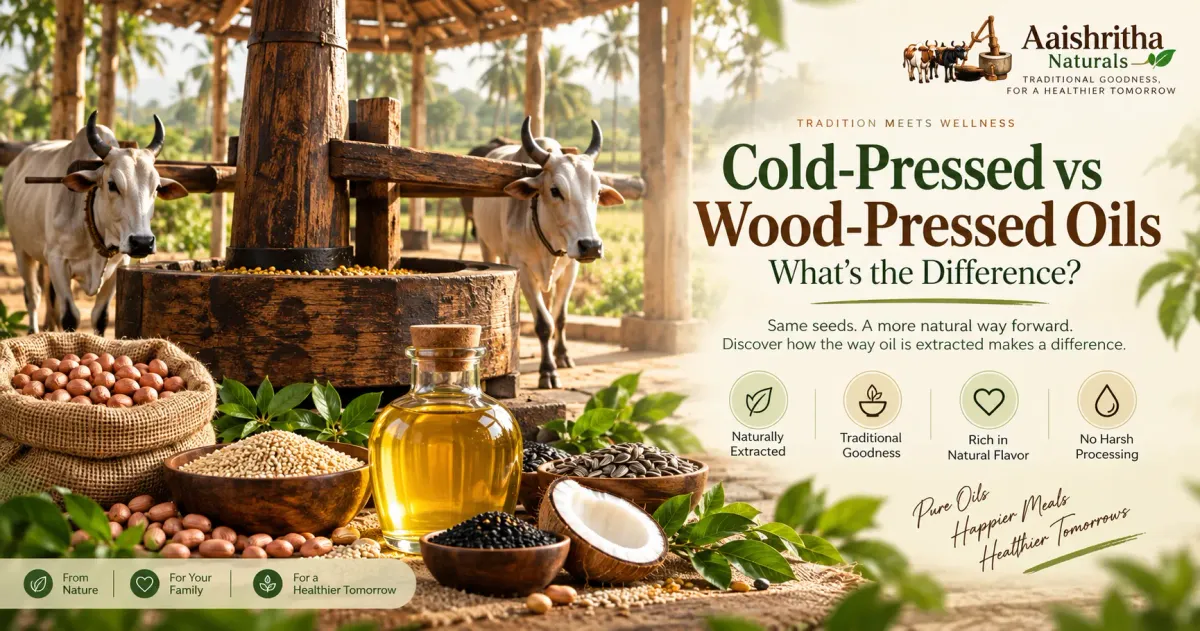
Cold-Pressed vs Wood-Pressed Oils: What’s the Difference?
When choosing cooking oil, you may come across terms like cold-pressed, wood-pressed, chekku, and ghani oil. While they are often used together, they describe different aspects of the oil extraction process.
Let’s understand how cold-pressed and wood-pressed oils are made and what makes traditional oil extraction special.
What Is Cold-Pressed Oil?
Cold-pressed oil is extracted by mechanically pressing seeds or nuts while minimizing heat. This gentle process helps retain the oil’s natural flavor, aroma, color, and naturally occurring components.
Common examples include groundnut, sesame, sunflower, safflower, mustard, and coconut oil.
What Is Wood-Pressed Oil?
Wood-pressed oil is traditionally extracted using a wooden chekku or ghani-style press. The seeds are slowly crushed and pressed to release their natural oil.
This traditional method is known for producing oils with a distinctive natural aroma and flavor. Depending on the region, it may also be called marachekku oil, chekku oil, or ghani oil.
Is Wood-Pressed Oil the Same as Cold-Pressed Oil?
Not exactly, but they can overlap.
Cold-pressed describes the extraction conditions and focus on minimizing heat, while wood-pressed describes the traditional wooden pressing method.
A wood-pressed oil can also be considered cold-pressed when its extraction process meets the relevant low-temperature requirements.
Cold-Pressed vs Wood-Pressed Oil
| Feature | Cold-Pressed | Wood-Pressed |
|---|---|---|
| Extraction | Mechanical pressing | Traditional wooden pressing |
| Main Focus | Minimizing heat | Traditional extraction |
| Flavor | Natural seed or nut flavor | Distinctive traditional aroma and flavor |
| Processing | Generally minimally processed | Traditionally extracted |
Why Choose Traditionally Pressed Oils?
The quality and character of an oil depend on several factors, including the quality of the seeds, freshness, extraction method, filtration, and storage conditions.
When choosing an oil, look for clear information about its ingredients, extraction process, packaging, and freshness rather than relying only on terms like “cold-pressed” or “wood-pressed.”
Which One Should You Choose?
There is no single answer for everyone. Cold-pressed and wood-pressed oils describe different parts of the extraction process.
Cold-pressed focuses on minimizing heat during extraction, while wood-pressed focuses on the traditional wooden pressing method.
Your choice can depend on the oil’s raw material, extraction process, freshness, flavor, and how it has been processed and stored.
Traditional Oils at Aaishritha Naturals
At Aaishritha Naturals, we bring traditional food practices into modern kitchens with a range of oils including groundnut, sesame, sunflower, safflower, mustard, coconut, and Niger oil.
Each oil has its own natural character, aroma, flavor, and culinary uses.
Final Thoughts
In simple terms:
Cold-pressed = focuses on minimizing heat during extraction.
Wood-pressed = focuses on the traditional wooden pressing method.
Understanding the extraction process helps you make a more informed choice and enjoy the natural character of traditionally extracted oils in your everyday cooking.