
Cold-Pressed Oil vs Refined Oil: Understanding the Difference
Cold-pressed and refined oils may come from similar ingredients, but their journey from seed to bottle can be very different. Discover the key differences in extraction, processing, aroma, flavour, and traditional oil-making methods.
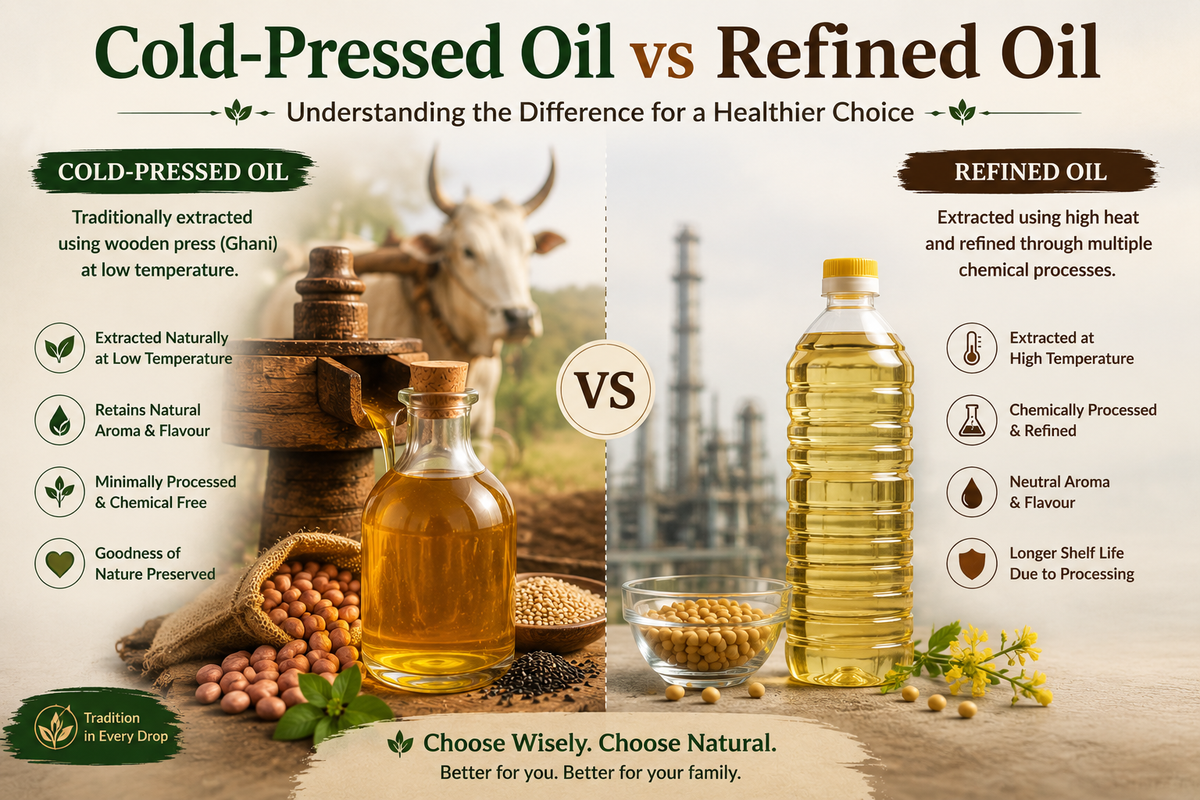
Cold-Pressed Oil vs Refined Oil: Understanding the Difference
Cooking oil is an everyday essential in almost every home. However, not all oils are made in the same way.
When choosing cooking oil, you may see terms such as cold-pressed, wood-pressed, and refined oil. Although these oils may look similar on a store shelf, the journey from seed to bottle can be very different.
Understanding how an oil is extracted and processed can help you make a more informed choice for your kitchen.
What Is Cold-Pressed Oil?
Cold-pressed oil is extracted from seeds or nuts using a mechanical pressing process designed to avoid excessive heat during extraction.
Traditional wood-pressed oils follow a slower method inspired by the age-old wooden ghani process.
Depending on the ingredient and extraction method, cold-pressed oils may retain their natural:
Aroma
Flavour
Colour
Character of the original seed or nut
The focus is on careful extraction and preserving the authentic characteristics of the ingredient.
What Is Refined Oil?
Refined oil generally goes through additional processing after the initial extraction.
The refining process can involve different steps intended to standardise characteristics such as colour, aroma, flavour, and stability.
The exact process can vary depending on the manufacturer and type of oil.
As a result, refined oils often have a more neutral appearance, aroma, or flavour compared with traditionally extracted oils.
Cold-Pressed Oil vs Refined Oil: The Main Difference
The biggest difference is how the oil is processed.
Cold-Pressed or Wood-Pressed Oil
The process generally focuses on:
Mechanical extraction
Slow and careful pressing
Avoiding excessive heat
Lower processing intensity
Retaining the natural character of the ingredient
Distinctive aroma and flavour
Refined Oil
The process generally involves:
Additional processing after extraction
Large-scale industrial production
Steps to alter or standardise the oil
A more neutral aroma and flavour in many cases
Processing designed for consistency and stability
The Difference in Aroma and Flavour
One of the most noticeable differences between traditionally extracted and refined oil can be the aroma.
Different seeds naturally have their own distinctive characteristics.
For example:
Groundnut Oil
Groundnut oil can have a pleasant nutty character and is widely used in everyday cooking.
Sesame Oil
Sesame oil is known for its rich and distinctive aroma and has been part of Indian culinary traditions for generations.
Coconut Oil
Coconut oil carries the familiar natural character associated with coconut-based cooking.
Traditionally extracted oils can offer a stronger connection to the original ingredient through their natural aroma and flavour.
Why Does Traditional Oil Extraction Take More Time?
Traditional extraction is a slower and more careful process.
Seeds need to be properly prepared before pressing, and the extraction process is not designed around producing the maximum quantity in the shortest time.
After extraction, the oil may also be allowed to settle naturally.
This requires patience and careful handling.
At Aaishritha Naturals, we believe traditional food preparation methods are valuable because they represent generations of knowledge and craftsmanship.
How to Choose the Right Oil for Your Kitchen
There is no single oil that is perfect for every recipe.
Your choice can depend on:
Your cooking style
The type of dish you are preparing
Your preferred flavour
The intended cooking use
The ingredients used
The processing method
Always read the product label and follow the recommended storage and usage instructions.
The Aaishritha Naturals Approach
At Aaishritha Naturals, our inspiration comes from traditional Indian food practices.
We value carefully selected ingredients, thoughtful processing, and the authentic character of natural products.
Our goal is to bring traditional goodness closer to modern kitchens.
From the source of the ingredients to the final bottle, we believe every step matters.
Choose Thoughtfully
Understanding how your cooking oil is made can change the way you look at this everyday kitchen essential.
Cold-pressed and traditionally wood-pressed oils represent a slower approach to extraction, while refined oils generally undergo additional processing.
The right choice for your home depends on your personal preferences, cooking needs, and the specific product you choose.
The important thing is to understand what you are buying and the journey behind every bottle.
Choose thoughtfully. Cook traditionally. Enjoy naturally.